

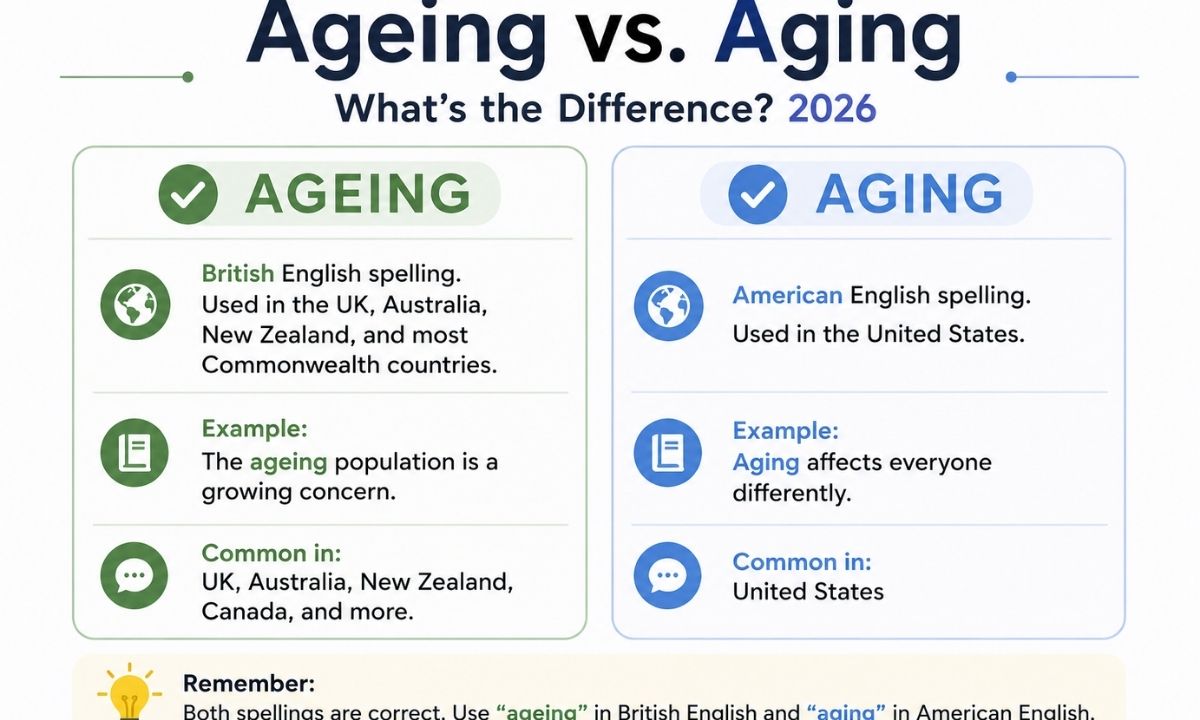
Have you ever seen ageing vs. aging indiffrent articals ? You may wonder whether one spelling is incorrect. Fortunately, both forms are correct.
The main difference comes from regional English. Aging is the usual spelling in American English, while ageing remains common in British English and several other varieties.
Both words come from the verb age. They describe the process of becoming older or developing over time.
For example:
The building is aging quickly.
A British writer may choose:
The building is ageing quickly.
The meaning does not change. Only the spelling differs.
This guide explains Ageing vs. Aging in simple English. You will learn their meaning, spelling rule, American and British usage, everyday examples, comparison points, pros and cons, common mistakes, and easy memory tips.
Ageing or Aging: Which Is Correct?
Both spellings are correct.
Use aging when following American English.
Use ageing when following British English.
| English Variety | Preferred Spelling | Example |
| American English | aging | The building is aging. |
| British English | ageing | The building is ageing. |
| Australian English | ageing | The process of ageing is natural. |
| New Zealand English | ageing | Ageing happens gradually. |
| Canadian English | aging is common | The material is aging. |
Therefore, you do not need to worry that one form is automatically wrong.
Instead, choose the spelling that matches your audience.
Quick Answer
Aging = American English
Ageing = British English
Both mean the same thing.
What Does Aging Mean?
Aging means the process of becoming older or changing as time passes.
It can describe people, animals, materials, buildings, products, systems, and many other things.
For example:
The aging building needs repairs.
Here, aging describes a building that is becoming older.
Another example:
The wine improves with aging.
In this sentence, aging means the process of developing over time.
Simple Meaning
In easy words:
Aging = becoming older or developing with time.
The exact meaning depends on the context.
For a person, it usually refers to getting older.
For a product, it may describe changes that happen as time passes.
What Does Ageing Mean?
Ageing has the same meaning as aging.
The extra e creates the British style spelling.
For example:
Ageing is a natural part of life.
This sentence means that becoming older is a normal part of life.
You can also say:
The ageing building needs attention.
The British spelling does not change the meaning.
Simple Example
American:
The population is aging.
British:
The population is ageing.
Both sentences communicate the same idea.
Why Are There Two Spellings?
The difference comes from the spelling conventions used by different English varieties.
American English often removes the extra e before a suffix beginning with a vowel.
That gives:
age + ing → aging
British English commonly keeps the e:
age + ing → ageing
Similar regional differences appear in other words, although the exact spelling rules can vary.
For example:
- aging / ageing
- canceled / cancelled
- traveled / travelled
- labeled / labelled
Consequently, the difference between aging and ageing fits a broader pattern of American and British spelling.
Aging in American English
Aging is the standard American spelling.
You will commonly see it in American newspapers, websites, books, advertisements, medical writing, business content, and everyday communication.
Examples include:
Aging is a natural process.
The aging population needs better services.
The company has an aging computer system.
The building is showing signs of aging.
Everyday American Use
An American speaker might say:
“The car is aging, but it still runs well.”
Another person could say:
“My grandparents are aging gracefully.”
The spelling aging fits standard American English.
Ageing in British English
Ageing is the traditional British spelling.
It commonly appears in British publications, government information, educational materials, books, and websites.
Examples include:
Ageing is a natural part of life.
The ageing population requires additional support.
The old building is ageing badly.
The effects of ageing become noticeable over time.
Everyday British Use
A British speaker may write:
“The car is ageing, but it still works well.”
Or:
“Ageing happens differently for everyone.”
The meaning remains unchanged.
Aging vs. Ageing in a Table
| Feature | Aging | Ageing |
| Main variety | American English | British English |
| Meaning | Becoming older | Becoming older |
| Pronunciation | Same | Same |
| Spelling | One “e” | Two “e” sounds in spelling |
| Formal use | Yes | Yes |
| Everyday use | Common in US | Common in UK |
| Meaning difference | None | None |
| Best audience | American readers | British readers |
The table shows the key point clearly: the difference is mainly regional spelling.
Aging in Everyday Life
People use aging in many real life situations.
Talking About People
Everyone experiences aging.
Aging is a natural part of life.
Some people think differently about aging.
These examples refer to getting older.
Talking About Objects
The word can also describe physical things.
The house is aging.
The furniture is showing signs of aging.
The old machine is aging badly.
Here, the word refers to deterioration or changes caused by time.
Talking About Technology
Technology can become outdated as it gets older.
For example:
The company has an aging computer network.
This means the network has become old and may need updating.
Ageing in Daily Conversation
British English uses ageing in the same situations.
For example:
The house is ageing badly.
Ageing technology can create problems.
The population is ageing.
The material changes during ageing.
The spelling changes, but the meaning remains the same.
Aging and People
One of the most common uses concerns people.
Aging can describe the natural process of becoming older.
For example:
Aging affects everyone.
Healthy habits can support people as they age.
The aging population is changing society.
The word does not necessarily have a negative meaning. It can simply describe a normal stage of life.
Common Phrases
You may encounter:
- Aging population
- Aging process
- Aging adults
- Healthy aging
- Signs of aging
- Aging society
These phrases are especially common in American English.
Ageing and People
British English uses the same expressions with the extra e.
For example:
- Ageing population
- Ageing process
- Ageing adults
- Healthy ageing
- Signs of ageing
- Ageing society
Therefore, British readers understand ageing as naturally as American readers understand aging.
Aging in Science
Scientists often discuss aging when studying changes that happen over time.
For example:
Researchers study the effects of aging on cells.
Another example:
Aging can influence many biological processes.
British scientific writing may use:
Researchers study the effects of ageing on cells.
Again, the regional spelling changes, not the basic meaning.
Aging Materials
Scientists and engineers also discuss how materials change.
For example:
Researchers tested the aging of the plastic.
The word can describe changes caused by heat, sunlight, pressure, moisture, or time.
Ageing in Culture
The word can also appear in discussions about society.
For example:
The ageing population has created new social challenges.
Here, ageing population refers to a population in which the average age is increasing.
American English would normally use:
The aging population has created new social challenges.
Both versions are correct for their respective varieties.
Aging in Business
Businesses use the word when discussing old equipment, workers, products, or systems.
For example:
The company needs to replace its aging computers.
Another example:
The aging infrastructure requires investment.
These sentences are common in professional writing.
Business Examples
The company has an aging customer base.
Aging equipment can reduce productivity.
The factory is replacing its aging machinery.
British writers may use ageing in each example.
Ageing in British Business Writing
British business content may use:
The company needs to replace its ageing computers.
The ageing infrastructure requires investment.
The factory is replacing its ageing machinery.
The meaning stays exactly the same.
Pros and Cons
Both spellings have advantages and disadvantages depending on your audience.
Pros of Aging
- Standard American spelling.
- Common in US publications.
- Familiar to American readers.
- Simple spelling.
- Widely used in online searches.
Cons of Aging
- May look unusual to British readers.
- Can seem inconsistent in British-style content.
- Mixing it with British spelling can reduce consistency.
Pros of Ageing
- Standard British spelling.
- Common in UK publications.
- Familiar to British readers.
- Works well in British academic writing.
- Fits British spelling conventions.
Cons of Ageing
- May look unusual to American readers.
- Can create inconsistency in American-focused content.
- Some American readers may expect aging.
Common Mistakes
The biggest mistake is assuming that one spelling is always correct.
For example, an American writer may think:
“Ageing is wrong.”
That is not true.
Likewise, a British writer should not assume:
“Aging is always incorrect.”
That is also incorrect.
The better approach is to consider your target variety of English.
Mixing Both Forms
Avoid switching between aging and ageing without a reason.
For example, an American article should not randomly use:
The aging population is growing.
and later:
The ageing population needs support.
Choose one style and keep it consistent.
How to Remember the Difference
Use this simple memory trick:
Aging → American
Ageing → British
Think of the extra e as a British spelling feature.
You can also remember:
US = aging
UK = ageing
This quick association makes the choice much easier.
Easy Spelling Rule
The base word is:
age
When adding -ing, American English commonly writes:
aging
British English commonly writes:
ageing
Neither form changes the pronunciation or meaning.
Pronunciation
Both aging and ageing have essentially the same pronunciation.
They are generally pronounced like:
AY jing
Therefore, you cannot normally hear the spelling difference in conversation.
This explains why the difference often becomes noticeable only when someone sees the word written down.
Why Pronunciation Can Confuse Learners
A learner may hear:
“Aging”
and wonder whether the word contains an e.
Because both spellings sound almost identical, remembering the regional rule helps.
Which Spelling Should You Use?
The answer depends on your readers.
For American Readers
Choose:
aging
For example:
The aging population needs more healthcare services.
For British Readers
Choose:
ageing
For example:
The ageing population needs more healthcare services.
For International Websites
You can choose either variety, but consistency matters.
If your website mainly targets the United States, use aging.
If your content targets the United Kingdom, use ageing.
Aging vs. Ageing for SEO
Search behavior can differ between regions.
American users are more likely to search for aging, while British users commonly use ageing.
Therefore, your target audience should guide your primary spelling.
However, avoid forcing the keyword into every paragraph. Search engines value helpful, readable content rather than awkward repetition.
Use related terms naturally, such as:
- Growing older
- Getting older
- Older adults
- Aging process
- Ageing process
- Aging population
- Ageing population
- Changes over time
Keep the Article Natural
Instead of repeating the exact keyword in every section, explain the topic with natural language.
For example:
Getting older is a normal part of life.
Then:
This natural process can affect people differently.
This approach improves readability and gives the article a more natural flow.
Real Life Examples
Here are practical examples from different situations.
At Home
The old furniture is showing signs of aging.
British version:
The old furniture is showing signs of ageing.
At Work
The company is replacing its aging equipment.
British version:
The company is replacing its ageing equipment.
In Society
The aging population needs better public services.
British version:
The ageing population needs better public services.
In Science
Researchers are studying how aging affects cells.
British version:
Researchers are studying how ageing affects cells.
In Everyday Speech
“The car is aging, but it still works.”
British version:
“The car is ageing, but it still works.”
Quick Comparison
| Question | Aging | Ageing |
| Is it correct? | Yes | Yes |
| Where is it common? | United States | United Kingdom |
| Does the meaning change? | No | No |
| Does pronunciation change? | No | No |
| Best for US content? | Yes | Usually no |
| Best for UK content? | Usually no | Yes |
| Good for formal writing? | Yes | Yes |
| Good for everyday use? | Yes | Yes |
FAQs Aging vs. Ageing
Is aging or ageing correct?
Both are correct. Aging is the common American spelling, while ageing is the common British spelling.
Does aging mean the same as ageing?
Yes. Both words describe becoming older or changing over time.
Why does British English use ageing?
British English traditionally keeps the e before the -ing ending in this word, giving ageing.
Is aging American English?
Yes. Aging is the standard spelling in American English.
Is ageing British English?
Yes. Ageing is the traditional and widely accepted British spelling.
Which spelling should I use?
Use aging for American English and ageing for British English. Above all, keep your chosen spelling consistent.
Conclusion
The difference between aging vs. ageing is simple. Both spellings are correct, and both carry the same meaning.
Aging is the preferred American English spelling. Ageing is the preferred British English spelling and remains common in other varieties influenced by British English.
The words describe the process of becoming older or changing over time. They can refer to people, buildings, technology, materials, populations, and many other things.
Therefore, the best spelling depends on your audience.
Remember this easy rule:
American English → aging
British English → ageing
Neither form is wrong. The key is to choose one spelling and use it consistently throughout your article, assignment, website, or professional document.